
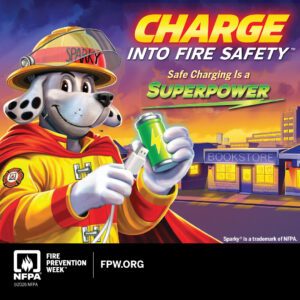
 Safe Charging Is a Superpower
Fire Prevention Week 2026 runs from October 4–10, and this year the National Fire Protection Association (NFPA) is putting the spotlight on something nearly every business, employee, and household uses every day: rechargeable batteries.
The 2026 theme, “Charge into Fire Safety™: Safe Charging Is a Superpower,” focuses on safe charging practices for lithium-ion batteries. These batteries power everything from smartphones and laptops to power tools, e-bikes, scooters, toys, and other rechargeable equipment.
For businesses, it is a timely reminder that fire prevention isn’t just about what happens during an inspection. It starts with everyday choices that can prevent a fire from happening in the first place.
Why Lithium-Ion Batteries Deserve Attention
Lithium-ion batteries store a significant amount of energy in a relatively small package. When a battery is damaged, defective, improperly charged, or used with incompatible equipment, it can overheat and potentially result in a fire or explosion.
And these batteries are everywhere.
Your employees may be charging phones at their desks. Maintenance teams may be charging cordless tools. A warehouse may have battery-powered equipment. Customers or tenants may bring e-bikes or scooters into a facility.
That means battery safety deserves a place in your organization’s overall fire prevention strategy.
5 Ways to Charge More Safely
- Use the Right Charger: Whenever possible, use the charger and cord supplied with the device or equipment, or a charger specifically approved by the manufacturer. A cheap replacement charger may not provide the correct voltage or current for the battery.
- Charge on a Hard, Flat Surface: Avoid charging devices on beds, couches, blankets, or other surfaces that can trap heat. Give charging equipment plenty of space for heat to dissipate.
- Don’t Ignore Warning Signs: Stop using a battery or device if you notice signs such as excessive heat, swelling or bulging, unusual odors, smoke, leaking, or damage to the battery or charging equipment. A damaged lithium-ion battery should not simply be put back on the charger and forgotten.
- Keep Charging Areas Clear: Don’t allow chargers, cords, or rechargeable equipment to create additional hazards around combustible materials, exits, electrical equipment, or other areas where a fire could spread quickly. For commercial facilities, it’s worth taking a look at where employees routinely charge equipment and whether those areas are appropriate for that use.
- Have a Bigger Fire Safety Plan: Safe charging is one piece of fire prevention, not the entire plan. Your facility’s fire protection systems need to be ready to do their jobs if prevention fails. Fire extinguishers, sprinkler systems, fire alarms, emergency lighting, and other life safety equipment require regular inspection, testing, and maintenance to remain ready when needed. That’s where a comprehensive fire protection program can make a difference.
Make Fire Safety Part of the Routine
At Associated Fire Protection, we believe fire protection works best when it isn’t something you have to scramble to manage.
From inspections and testing to repairs and ongoing maintenance, our goal is to help businesses keep their fire protection responsibilities on track and their systems ready when they are needed.
This Fire Prevention Week, charge into fire safety—and make prevention part of your everyday routine.
Need help keeping your facility’s fire protection program on track? Contact Associated Fire Protection to learn how we can help.


